
The three readings, once again, dovetail well on this Feast of the Body and Blood of Christ. That first reading, from the Book of Deuteronomy, recalls an event that took place about 3, 5000 years ago. Moses and the rest of the Hebrews had left the slavery of Egypt behind, had journeyed through the desert for 40 years, entered into a covenant relationship with God, and now were on the cusp of entering the Promised Land. But before they …
 by admin
You might remember that we heard a fuller version of this same gospel story on the Second Sunday of Easter. In that longer version Jesus invited Thomas to reach out and touch his wounds and to believe. This is John’s gospel, where the giving of the Holy Spirit, the feast of Pentecost, doesn’t happen 50 days after the resurrection but in the evening of the same day Jesus rose from the dead. On that first Easter morning, the women …
by admin 
When I think of my own discernment, that is, when I was trying to figure out God’s will for my life, like you, I got no clear sign from heaven. Maybe that’s the way it’s supposed to be so that we have to keep coming back to God, even daily, for nourishment, strength, and guidance.
What preoccupied my mind for months, and even years, was whether I should become a teacher or a physiotherapist. One day …
by admin 
The gospel passage I just proclaimed is a continuation of last Sunday’s gospel. It’s the farewell discourse. After Jesus breaks bread with his disciples and washes their feet, he spends the next five chapters saying good-bye to them. One remarkable thing is that although Jesus is within a day of his own cruel and unjustified death, his focus is not on himself. Jesus does not waste one minute looking for pity, or a shoulder to cry on, or on …
by admin 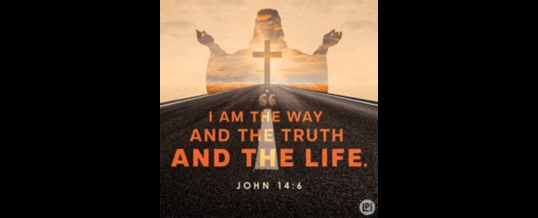
Whenever we gather for Eucharist, our first reading we listen to always comes from the Hebrew Scriptures, what we traditionally called the Old Testament. The exception to this is during the 50 days of Easter, where the first reading comes from the Acts of the Apostles. Acts tells us of how the Church came to birth when it no longer had Jesus physically present to them. The early Christians truly relied on the ongoing presence of Jesus in his …
by admin 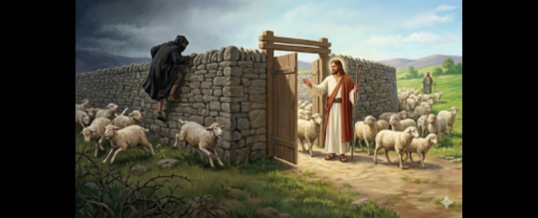
There is a pattern in this gospel story, a movement you might say. And the pattern seems to go like this. First you follow Jesus, then you find abundant life. The point of following the shepherd, if you see yourself as one of the sheep, is that you might be led to pastures of abundant food. “I came that you may have life and have it abundantly.” The movement is not that you first find some kind of abundant …
by admin 
Some 60 years ago, when the Second Vatican Council ended (1963-1965), the world’s bishops were looking for a metaphor to describe the Church. They settled on not calling the Church a divinely instituted hierarchy but instead a “pilgrim people of God.” What they were saying was: 1) the Church is made up of people, 2) the people are God’s people, and 3) these people were on a journey, a pilgrimage you might say. Until then we always thought life …
by admin 
All throughout these 50 days of Easter, our first reading will come not from the Hebrew Scriptures (Old Testament), but from the Acts of the Apostles. The Acts of the Apostles are stories about the beginnings of the Church and how the Early Church survived and thrived under the influence of the Holy Spirit, the Spirit promised and delivered by Jesus.
Today’s first reading speaks about how the early Christians came together for the breaking of …
by admin 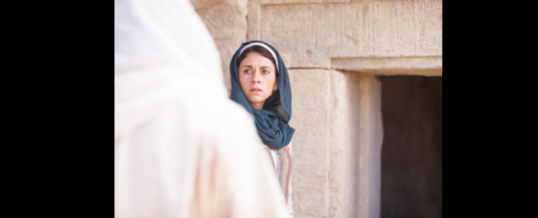
All four gospel writers (Matthew, Mark, Luke and John) have slightly different versions of the resurrection story as you probably know. They are not contradictory stories per se but stories that give us four different angles on the one truth, that Jesus is risen and is still bringing about God’s kingdom in our world.
Today’s story, John’s version, begins this way: Early on the first day of the week, while it was still dark, Mary Magdalene …
by admin 
You might remember how the Passion story ended last Sunday, on Passion Sunday (Palm Sunday). After Jesus is crucified, he’s placed in a tomb. Matthew, the gospel writer, throws in this little hint that Mary Magdalene and the other Mary sat opposite the tomb. This is a clue of what is to come. Pretend you never heard the story and have no idea that it ends in resurrection. Mary Magdalene isn’t just sitting anywhere; she’s sitting opposite the tomb. …
by admin