
I am told there are three kinds of cultures in the Western world today, each with its own “bottom line”: political cultures based on the manipulation of power, economic cultures based on the manipulation of money, and religious cultures based on the manipulation of some theory about God. These three cultures are based on different forms of violence, although it is usually denied by most participants and hidden from the superficial observer. Evil gains its power from disguise. Jesus undid the mask of disguise and revealed that our true loyalty was seldom really to God, but to power, money, and group belonging. (In fact, religion is often the easiest place to hide from God).
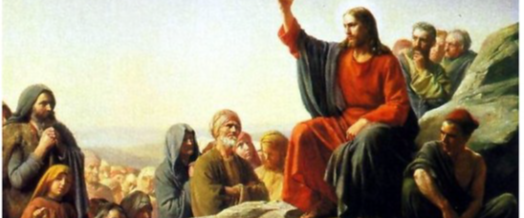
Jesus announced, lived, and inaugurated a new social order, an alternative to violence, exclusion, and separation. Jesus went so far as to promise this alternate reality. It is no fantastical utopia, but a very real and achievable peace—by the grace of God. He called it the Reign or Kingdom of God. It is the subject of his inaugural address (Lk. 4:14-30), his Sermon on the Mount (Mt. 5-7), and most of his parables. Indeed, it is the guiding image of Jesus’ entire ministry. Most Christians glibly recite, “Thy Kingdom come,” but this means almost nothing until and unless they also say, “My kingdom go.”
Challenging the status quo is unpopular. Jesus was killed for opposing the religious and political powers of his time. “It is better for one man to die for the people” (Jn. 18:14) than to question the bottom line that is holding the whole system together.
When Christians accept that Jesus was killed for the same reason that people have been killed in all of human history (rather than because he walked around saying, “I am God”), we will have turned an important corner on our quest for the historical Jesus. He was rejected because of his worldview much more that his God-view. Yet these two are intrinsically connected. This now and not-yet Reign of God is the foundation for our personal hope and our cosmic optimism, but it is also our deepest alienation from the world as it is. We are strangers and nomads on this earth (Heb. 11:13). Our task is to learn how to live in both worlds until they become one—at least in us.
(quoted from Fr. Richard Rohr)
JUN
2026
About the Author: