
These Scripture stories, if we spend even the shortest amount of time with them, will always name what’s going on in our personal lives or in the life of the world at large. For instance, as I approach my 60th birthday in November, I’m debating whether or not to start collecting my C.P.P. (Canadian Pension Plan) at 60 or postpone it a little longer. (I’m sure I’ll get all kinds of advice from you as soon as Mass is over!).
In the first reading, from the Book of Ecclesiastes, the Teacher, who seems to be down in the dumps, says that everything is vanity. It’s all smoke. It counts for nothing in the end. There’s no greater purpose to what we do and who we are, so why bother making any further efforts?
I’m sure you’ve all asked yourself similar questions like, “Is this all there is to life? To my marriage? To my career? What’s it all about?” He goes on to say, “What’s the point of working your fingers to the bone only to die, and everything you worked for is enjoyed by another person who did not work for it.” I’ve heard many stories and I’ve buried many people who paid into the government pension plan but who died just at or before retiring. They never got to enjoy the financial benefits of their pensions that they paid into all those years. It seems to be what the writer of Ecclesiastes is bemoaning. No wonder he says that all is vanity.
There’s a little bit—or maybe a whole lot—of this going on in the gospel as well. Jesus isn’t commenting on financial planning for the future; he’s railing against greed. Toward the end of the parable about the greedy farmer, Jesus says, “After you die, which could happen this very night, who is going to get your barnful of goods?” Apart from the obvious lesson against greed, Jesus is asking us to consider what really are our priorities while we walk this earth.
The reason Jesus told the parable about the rich man was because someone lost perspective in life. This person in the crowd doesn’t know what his priorities are. He’s in a dispute with his brother over the parents’ inheritance. Obviously, he feels cheated on some level and wants Jesus to be the referee and settle the whole issue, preferably in his favor.
Jesus sees something deeper going on beyond the impartial division of a will. He sees a man who has lost his priorities. This man, who has brought this complaint to Jesus is willing to forsake his relationship with his brother for the cash. For him, money is more important than people. Whichever brother Jesus sides with division will be the outcome. Jesus did not come to divide. He came to unite, to reconcile people who were divided. Jesus is not going to relinquish his mission to unite people simply because two brother can’t get along. Jesus chooses neither brother not because he runs from conflict nor because he wants to be liked by everyone. He chooses not to be a referee, a judge, so as to put this man’s concern in a bigger context. I can’t tell you how many awkward funerals I’ve presided over in the past 28 years because of family members fighting over a will. Similarly, so much greed is justified in the corporate world where profit is put before people. How many times have we heard about North American companies exploiting the natural resources of a developing country, leaving an environmental disaster in their wake, and getting out of Dodge with their profits? “Get as much as you can for as long as you can regardless of how it effects the planet and generations to come” seems to be the mantra of unbridled capitalism.
Greed stems from a sense of entitlement which is rampant in the North American climate we live in. The appetite of greed is always the same: it eats yet remains hungry. Greed is an endless search for more that always leaves the searcher experiencing lack rather than fulfillment. That’s why Jesus gives the stern warning, “Be on your guard against all kinds of greed.” Preaching this has made no difference at all, as the greediest countries of the world are all predominantly Christian countries. Greed and hypocrisy, not adultery and murder, are the two hot sins Jesus criticizes the most.
Perhaps greed and entitlement have their roots in forgetfulness. We forget the source of goodness—God—and think we are the reasons for our own success. And if we have worked so hard for our own possessions, we better store them securely, guard them, and pack a whole bunch of insurance around them in case they are threatened. This strategy Jesus calls foolish. The hoarder in today’s gospel is not condemned because he’s evil; he’s condemned because he’s foolish. “You fool! This very night your life is being demanded of you.”
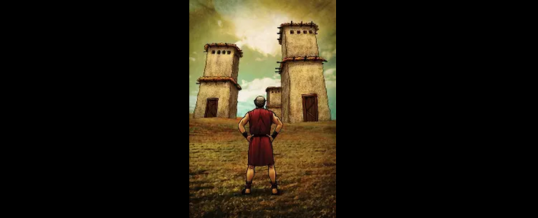
What is foolish is that he forgets the source of the goodness in his own life. His life is self-referential; everything revolves around him. He cares little about God, the earth, or generations to come. The parable starts off with, “The land of a rich man produced abundantly.” Notice, it’s the land, and not the man per se, that does the producing. At best, the man works with and manages what the earth has already given him.
At Mass, when the bread and wine are brought to the priest at the altar, the first words out of the priest’s mouth are, “Blessed are you, Lord, God of all creation, for through your goodness we have received the bread we offer you: fruit of the earth and work of human hands, it will become for us the bread of life.” Before it is worked with our human hands, it’s first and foremost fruit of the earth. God gave it to us. The earth gave it to us. That’s what the hoarder in the parable forgot. He forgot it was the land that produced abundantly. Before the man did anything with it, the land had already given it to him. When we forget, we move into entitlement and entitlement always leads to greed.
The priest continues with the wine saying, “Blessed are you, Lord, God of all creation, for through your goodness we have received the wine we offer you, fruit of the vine and work of human hands, it will become our spiritual drink.” Before it is worked by human hands, it is first and foremost the fruit of the vine. So, first we receive everything, and I mean everything. Then, we work with it. First, you’re given a brain, and then you work hard to apply yourself and get a degree or a diploma. First, you’re given the gift of being a parent, then you work hard to raise those children as best you can. First, you are give the gift of wealth, then you work hard to share it with others. First, you’re given a talent, then you work hard to share it with your parish and broader community.
The opposite of poverty is not riches. The opposite of poverty is community. As long as we have each other and allow a mutual flow of love to pass between us, we will never be without. Here’s a story that has come down the pike in many slightly different versions that makes this point.
A man was once taken on a tour of hell and was surprised by what he saw: All hell’s inhabitants sat at long tables in a dining room, spoons in their hands, the best-smelling and best-looking food to have ever graced a dining room filled the air with an exquisite aroma.
Unfortunately, everyone at the dining room table had spoons about 3 feet long and so were unable to bend the spoons to their mouths to feed themselves. Hell was filled with the hungry, tortured by the fact that they were so close to the most amazing food imaginable and yet could not eat it.
Then the man visited heaven and found the same scenario: long tables, 3-foot-long spoons, and hungry people unable to bend their spoons in the direction of their own mouths to eat. But there was a profound difference. The souls in heaven sat across from each other, not trying to feed themselves, but trying to feed the person sitting across from them. You see, the difference between heaven and hell, it might be said, is that the inhabitants of hell are concerned only for themselves. Heaven, on the other hand, is populated with people who spend their time serving each other.
We can likewise make our lives here on earth an extension of heaven or a reflection of hell. The difference between the two just may be our willingness to forget ourselves long enough to turn our attention outward to those whose stomachs, hearts or souls, hunger to be fed.
~Fr. Phil
AUG
2025
About the Author: