
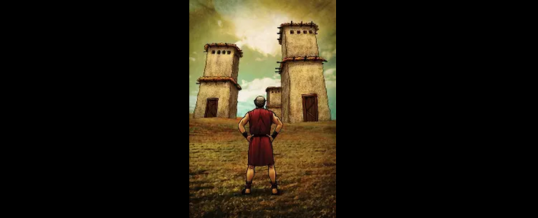
These Scripture stories, if we spend even the shortest amount of time with them, will always name what’s going on in our personal lives or in the life of the world at large. For instance, as I approach my 60th birthday in November, I’m debating whether or not to start collecting my C.P.P. (Canadian Pension Plan) at 60 or postpone it a little longer. (I’m sure I’ll get all kinds of advice from you as soon as Mass is …
 by admin
This story, about the disciples asking Jesus to teach them how to pray, begins with an observation. It begins with noticing. The disciples observed Jesus, probably from a distance, as he prays. They knew that Jesus was drawing his life, his energy, from a source that sustained him in ways that they, themselves, were not being sustained. So, they figured the key must be prayer. And if prayer sustains Jesus, then maybe they should ask how it works, so …
by admin 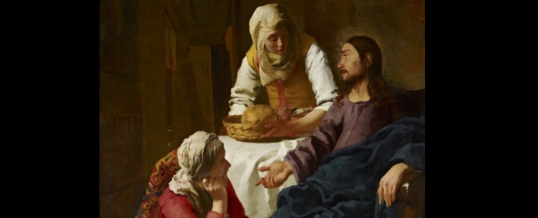
Like all gospel stories, this Mary and Martha story has many layers to it. Let’s pull back a few layers and see what it has to say to us. If it is the Word of God—the living Word of God–it should be as relevant now as it was 2000 years ago.
Layer one. I’ll just call it “Mary’s gutsy move.” Actually Mary doesn’t move at all; she sitting on her duff while Martha is doing all …
by admin 
There is a spirituality for the first half of our lives and a spirituality for the second half of our lives. First half of life spirituality and second half of life spirituality are very different from each other, but both are necessary. Unfortunately, most of us Catholics—including us priests—continue to operate out of a first half of life spirituality even when it is no longer serving us well. We just keep trying the same old things over and over …
by admin 
I had the privilege twice of making it to the Holy Land and visiting Caesarea Philippi, the setting for today’s gospel story. It’s no longer called Caesarea Philippi but Banias. It was easy to be there, take in the history, and snap a few pictures, and move on. But it wasn’t so easy for Peter 2,000 years ago. Jesus dared to ask the questions, “Who do people say that I am?” and “Who do you say that I am?” …
by admin 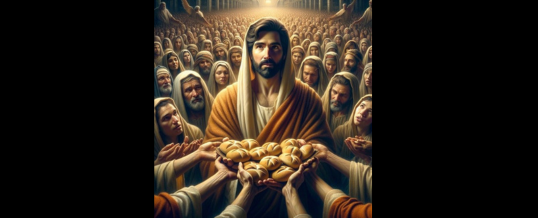
As with every gospel story we hear, including this one, the miraculous feeding of the multitude, it’s often helpful to read the story that precedes it. It gives us context and context is always a good thing to have. Bad theology–and there’s lots of it around–doesn’t do that. People, including priests, will take a handful of lines from the entire Bible and run all of reality through those three or four lines in order to justify why they are …
by admin 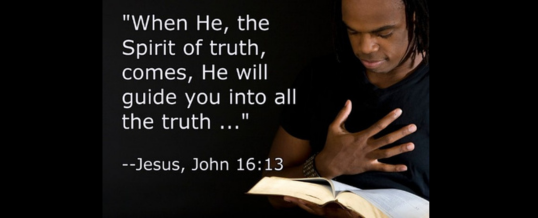
Before any of the great religions were established, including Christianity, there was wisdom. Cultures were guided by wisdom figures, guides, mentors—men and women who had been on some kind of spiritual journey themselves. These wisdom figures lived by a truth that was not only bigger than their little, individual truth, but also by a truth that was humbly passed on from generation to generation. Since there were no books or computers, wisdom was passed on verbally through stories but …
by admin 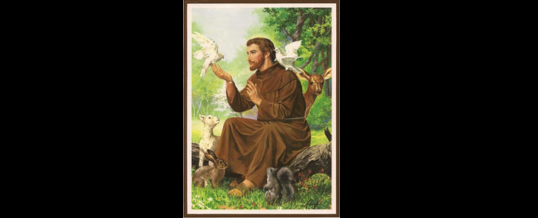
The late Pope Francis, in my mind, will go down in history as one of the greatest popes ever. He was a prophet, no doubt. As with all prophets, Biblical or otherwise, they are only appreciated once they are long dead. While alive they are too disturbing to our comfortable lifestyles and ways of thinking. Prophets never fit into our neatly-constructed boxes, boxes that contain our never-changing set of certitudes and rules, the very things that nobody better call …
by admin 
As I mentioned last weekend, the four gospel writers aren’t always on the same page, chronologically, when they write about the events of Jesus’ life including the timing of the great events of Ascension or Pentecost. In fairness to them, they are not primarily trying to give us an historical or a chronological account of Jesus’ life. They are attempting to convey spiritual truths about Jesus, truths that are meant to form us here and now, in 2025.
by admin 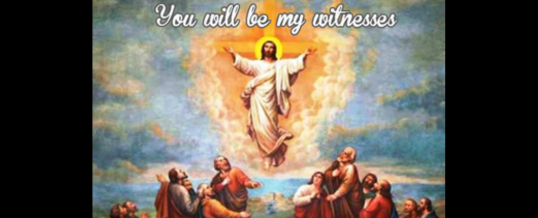
I’ve always felt that today’s feast, the Ascension, only makes sense in the light of next Sunday’s feast, Pentecost. If Ascension is about the great leaving of Jesus, then Pentecost is about the great return of Jesus. Or, as Jesus said in last Sunday’s gospel passage, “I am going away, and I am coming to you” (Jn. 14:28). To which I always want to ask, “Jesus, are you coming or are you going? Because this kind of talk is …
by admin